Anker SOLIX has officially launched in the Philippines with its XE Hybrid whole-home storage system — but the residential line carries no public price tag. That missing number is the real story: you cannot comparison-shop a whole-home storage system until you have gone through a professional quoting process. Here is what the launch announced, what the fine print says, and how modular inverter-plus-battery builds compare.
What Anker SOLIX Announced in ManilaOn October 14, 2026, Anker's energy-storage brand SOLIX entered the Philippine market with a launch event in Taguig City's BGC/McKinley district. Distribution and retail run through electronics distributor NAVCO (president Ryan Tan); system design, installation and support are handled by GoPrime Technology Corp. through its GoSolar arm (CEO Engr. Bhong Bibi). The partners plan to extend the network to Visayas and Mindanao and are exploring installment financing.
Three residential lines were introduced:
The launch makes sense: the Philippines has the second-highest residential electricity prices in Southeast Asia, per the NAVCO president, and El Niño droughts plus typhoon-season blackouts give home backup genuine demand. Anker's brand, retail channel and installer network are a real moat — for a family wanting one tidy, professionally installed system, snap-together modules and a claimed 0ms transfer are genuinely attractive.
Why No Price Tag Is the Real StoryMissing from every report: neither the XE Hybrid nor the SolarBank 4 has a published price. Both residential lines sell only through professional channels with custom quotes, and Anker is building an EPC installer network nationwide to deliver them.
That matters for a simple reason: without a public price, you cannot comparison-shop — not against a modular alternative, not against a competitor, not even against your own expected savings — until you have contacted a dealer, scheduled a site assessment and received a custom quote. The portable line does carry published Philippine prices (C300 DC ₱12,990; C1000 Gen 2 ₱39,990; C2000 Gen 2 ₱61,990), which makes the residential silence more noticeable.
A missing price tag is not proof of a bad deal. It is proof that you are buying a project, not a product — and projects deserve the same price transparency as any major home investment.
Launch materials estimate that 8–10 panels save ₱64,700–80,900 per year at Meralco's September 2026 rate of ₱14.50/kWh — implying payback in about 3 years. Those are manufacturer estimates, not guarantees. They assume Manila sunshine and today's tariff — change either and the math moves with it. The claimed 0ms switchover is likewise worth checking against independent reviews, and the 42kWh ceiling is reached only with the brand's own proprietary modules. Estimates are starting points for your own calculation, not the calculation itself.
What an All-in-One Locks InThe XE Hybrid's elegance is also its trade-off: inverter and battery live in one proprietary stack, expandable only with the brand's modules up to 42kWh. Two things to understand before signing:
For a homeowner who never wants to touch a wire, that trade is reasonable: one brand, one installer, one phone number. But it gives up component transparency, repairability and the freedom to shop each part on its own merits.
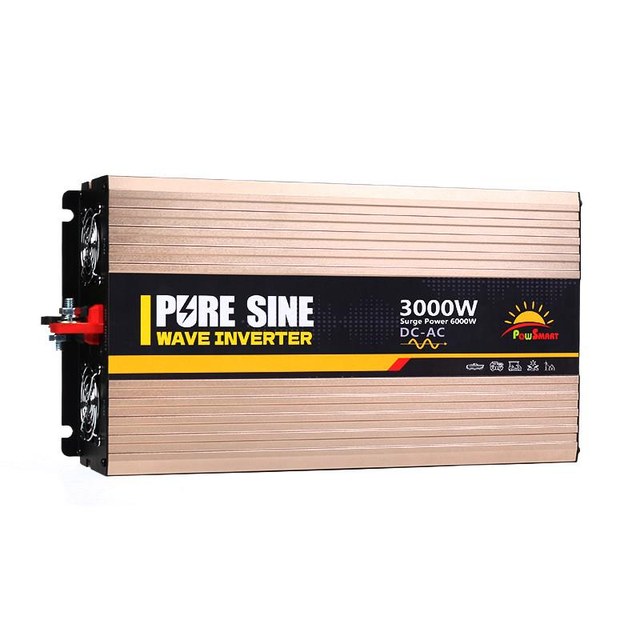
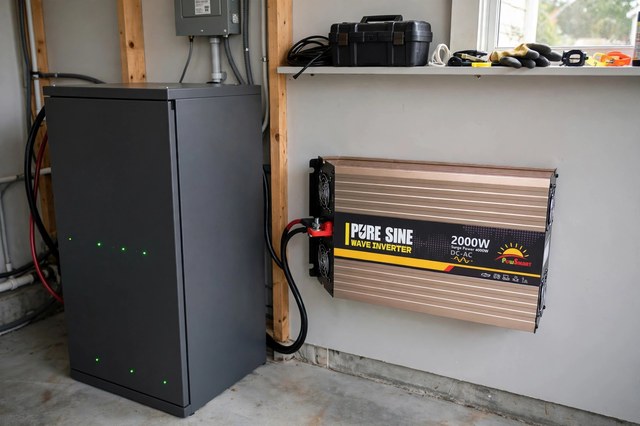
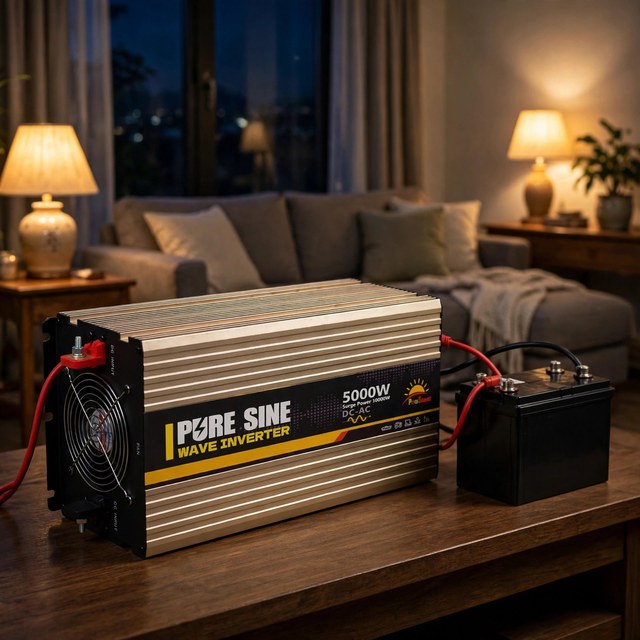
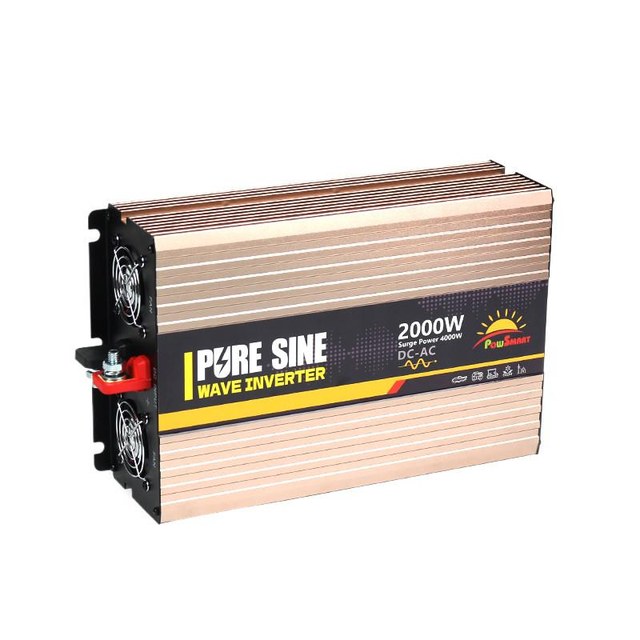
The Modular Alternative: Inverter and Battery, Priced SeparatelyThe other route is modular: a standalone pure sine wave inverter sized to your critical loads, plus a battery bank sized to the runtime you want. Each part has a transparent price and a replacement path — if one component fails, you replace that component, not the system. It also starts today: no assessment queue, no quote process. List the loads you cannot lose — fridge, lights, router, fans — pick an inverter in the 300W–6000W range with headroom, and add enough battery for the hours you need. Zhejiang Sunrise New Energy's REP series spans that whole range in 12V, 24V and 48V: a 2000W model (4,000W surge) covers fridge, lights, TV and laptop together, while a 3000W model (6,000W surge) adds a 1,000–1,200W microwave, washing machine or small air conditioner.
The honest trade-off: modular needs basic wiring work or an electrician. It is not plug-and-play. What you get back is full visibility into what each part costs and does.
The sizing logic is the same either way:
See our guide on choosing the right inverter size for home battery backup.
Frequently Asked QuestionsHow much does the XE Hybrid cost in the Philippines?
There is no published price — the residential line is quoted through installers on a custom basis.
Is the 3-year payback guaranteed?
No. The ₱64,700–80,900 yearly savings and payback are manufacturer estimates based on Manila sunshine and the ₱14.50/kWh tariff.
Can I expand an all-in-one with third-party batteries?
Generally no — stacks like the XE Hybrid expand only with the brand's own modules, up to 42kWh.
What size standalone inverter for home backup?
Size to critical simultaneous loads plus 20–25% headroom: 2,000–3,000W covers fridge, lights, router, TV and laptop; add a microwave or air conditioner and plan 3,000–5,000W.
Do I need an electrician for a modular setup?
Above a small plug-in unit, yes — high-current DC wiring, fusing and ventilation should be done or checked by someone qualified.
Anker deserves credit for bringing serious home-storage hardware and a real installer network to the Philippines — for many families, a professionally installed all-in-one is the right, stress-free choice. But a whole-home system is a major investment, and an investment you cannot price-compare is one you cannot fully evaluate. Quoted all-in-one or modular build, demand the same transparency as any big purchase: the full system price in writing, the assumptions behind the savings, and a clear answer on what happens when one part fails.
Considering modular? Zhejiang Sunrise New Energy Co., Ltd. designs pure sine wave inverters from 300W to 6000W for home backup, RV and off-grid use. Tell us the loads you must keep running and the backup hours you want — we will size the right inverter and battery combination. Contact us for a free sizing consultation.

We use cookies to enhance your browsing experience, serve personalized ads or content, and analyze our traffic. By clicking "Accept All", you consent to our use of cookies.