Bluetti's new Elite 100 mini squeezes a full kilowatt-hour of battery into the smallest 1kWh-class power station the brand has ever made — but its AC output stops at 700W. That makes it genuinely enough for laptops, lights, a mini fridge or a Starlink terminal — and equally genuinely not enough for a full-size microwave, a space heater or an electric kettle. It is a good little backup and camping box, and its 700W ceiling is exactly why bigger loads call for a different kind of product.
What did Bluetti announce?The Elite 100 mini is a portable power station with 1,004.8Wh of lithium iron phosphate (LiFePO4) battery and 700W of pure sine wave AC output. Bluetti describes it as its most compact 1kWh-class model, with 10ms UPS switchover for critical loads, cells rated for 6,000 cycles down to 80% capacity, nine output ports (three AC outlets, USB-A, 65W and 140W USB-C, a 12V car socket and two DC5521 jacks), a built-in LED lamp, app control and up to 350W of solar input.
Two launch facts matter for pricing. The unit went on sale in the Philippines on October 20, exclusively through Lazada (newsbytes.ph, October 16, 2026), while Bluetti's own announcement lists a US starting price of $399 (PR Newswire, October 6, 2026). Those are the verified numbers; anything quoted for other markets is speculation this article will not repeat.
Real-world reviewers (iphoneincanada, October 7, 2026) report the 700W limit exactly where you would expect: a full-size microwave or a space heater trips the ceiling, while laptops, lamps, a mini fridge and Starlink hardware run comfortably.
None of that is a failure of the product. It is the physics of an all-in-one, and it raises the question every small-station buyer should ask before clicking buy.
What does 1kWh of capacity actually tell you?Capacity (Wh) tells you how long; output (W) tells you what. They are different numbers, and confusing them is the most expensive mistake in backup power.
Think of it as a water tank and a tap: a 1,004.8Wh tank holds the same amount of energy whether the tap runs at 70W or 700W. The tank size decides runtime — about fourteen hours for a 70W load versus under an hour and a half at full 700W output. The tap size decides which appliances can run at all. Nothing about the tank changes the tap.
A practical list makes this concrete. On 700W or less, the Elite 100 mini handles: a Wi-Fi router and phone charging, LED lighting, a laptop, a mini fridge, a CPAP machine without its heated humidifier, camera battery charging and a Starlink terminal. Over 700W — a kettle (1,000–1,500W), a full-size microwave, a hair dryer, a space heater, large power tools — the output simply stops mattering how big the tank is; the appliance will not start.
So "is the new mini enough?" has a two-word honest answer: it depends on the load list, not the capacity. Light loads that need hours of runtime — this is a good product. Anything with a heating element or a big motor — the wattage ceiling decides, and 700W is the ceiling.
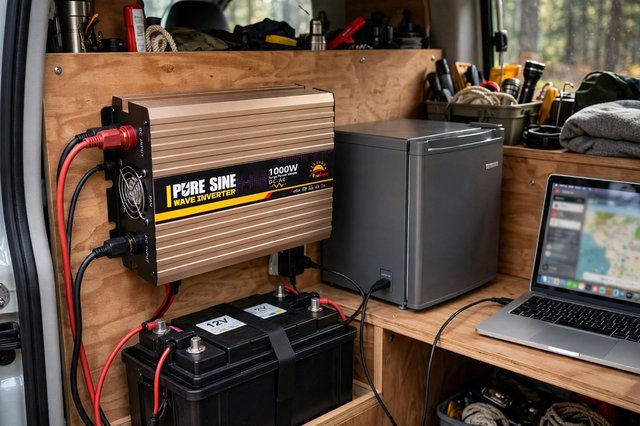
Because an all-in-one's output power is fixed at the factory. The inverter inside the Elite 100 mini is a 700W inverter, and no setting, app update or second battery changes that. When your loads grow past 700W, the only upgrade path is a whole new station.
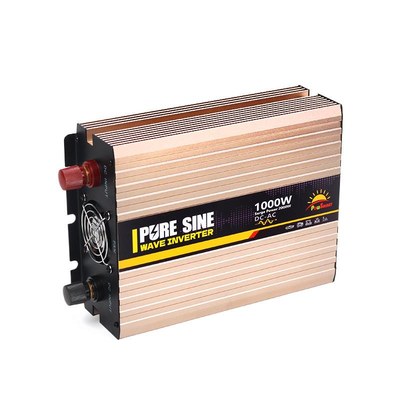
This is the structural trade-off of the format: convenience on day one, rigidity on day one thousand. A separate inverter is chosen by load, and the battery is chosen by hours — independently. The REP pure sine wave range from Zhejiang Sunrise New Energy Co., Ltd. spans 300W to 6,000W in 12V, 24V and 48V versions, so a 700W-class load, a 2,000W cooking setup and a 5,000W whole-van setup each get exactly the inverter they need, and adding runtime later just means adding battery capacity — or replacing whichever single part wears out, instead of the entire box.
If the mini's 700W is enough for your loads forever, the all-in-one wins on simplicity. If your loads might grow — a bigger fridge, a second appliance, a future cabin — a standalone inverter with its own battery is the architecture that grows with you.
How do you size a standalone inverter for loads like these?Write down every appliance that must run together and its wattage. Light loads — router, lights, laptop, mini fridge — typically total well under 1,000W. Add heating or motor-driven items one at a time and note the real peak.
Motors and compressors draw extra power at start-up. Pure sine wave output matches grid power and is safe for fridge compressors, chargers, medical devices and sensitive electronics — leave headroom above the running total instead of sizing exactly at the limit.
Match the total to the REP pure sine wave range, from 300W through 1,000W, 1,500W, 2,000W, 3,000W, 4,000W and 5,000W up to 6,000W, in the 12V, 24V or 48V version that fits your vehicle or battery bank. Size the battery separately for the hours you need.
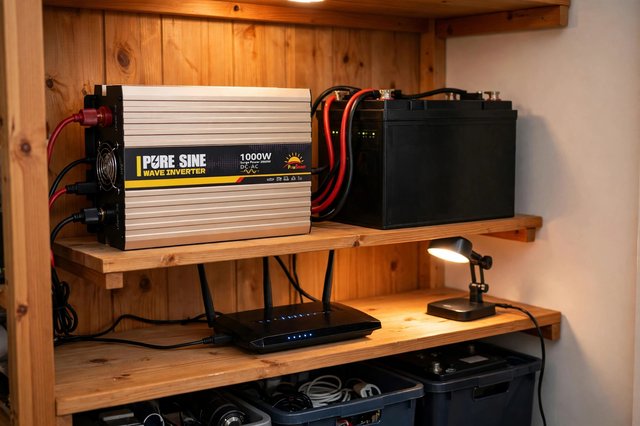
Use short, correctly rated DC cables, fit the proper fuse close to the battery, keep terminals tight and give the inverter ventilation. At higher wattages the DC current is large, so cable and fuse sizing are safety requirements, not accessories.
Frequently Asked Questions700W of pure sine wave AC output from a 1,004.8Wh LiFePO4 battery. That is enough for laptops, lights, a mini fridge or a Starlink terminal, but not for a full-size microwave, a space heater or an electric kettle.
Bluetti's announcement lists a US starting price of $399, and the unit launched in the Philippines on October 20, exclusively on Lazada. Verified pricing for other markets has not been published.
Roughly ten hours in theory (1,004.8Wh ÷ 100W), less in practice after inverter losses and overhead. Capacity decides runtime; output decides which loads can run at all.
No — the output wattage of an all-in-one is fixed at the factory. Adding capacity does not add output power. If you expect heavier loads in the future, a standalone inverter sized to those loads with a separately expandable battery is the upgradeable path.
For the light-load profile a mini station serves (lights, router, laptop, small fridge), a 1,000W–1,500W pure sine wave inverter is the natural equivalent, sized from your actual simultaneous load total with surge headroom.
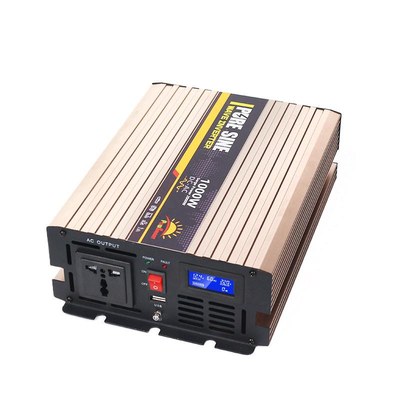
Already bumping against a wattage ceiling? Send Zhejiang Sunrise New Energy Co., Ltd. your appliance list through cninverter.com, and we will recommend a pure sine wave inverter sized to your actual loads — with a battery sized to your hours, and an upgrade path that does not need a whole new box.

We use cookies to enhance your browsing experience, serve personalized ads or content, and analyze our traffic. By clicking "Accept All", you consent to our use of cookies.