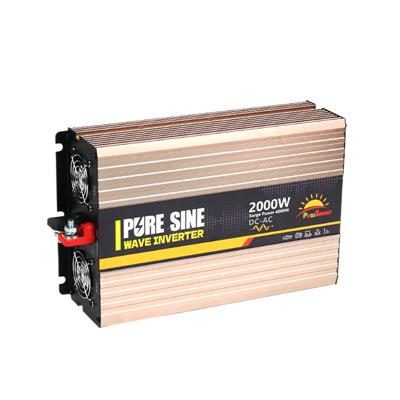
Audi's new A2 e-tron can power your home with vehicle-to-home (V2H) — but only if you live in Germany, Austria or Switzerland. The car also supports vehicle-to-load (V2L) for appliances, yet Audi has not published a V2L output figure, and European deliveries do not start until December. If you live anywhere else, a standalone pure sine wave inverter paired with your own battery is still the home backup option that works today, with any car, in any country.
What did Audi show with the new A2 e-tron?Audi unveiled the A2 e-tron at the 2026 Paris Motor Show. Multiple reports from the show agree on the headline facts: energy consumption as low as 12.8kWh per 100km on the WLTP cycle, making it Audi's most efficient production car to date, a starting price in Germany of 38,200 euros, and the start of European deliveries in December.
That efficiency deserves real credit. A car that uses less energy to drive also stretches every kilowatt-hour further when its battery powers something else.
What is the difference between V2L and V2H on this car?They are two different features, and only one of them powers a house.
The A2 e-tron supports V2L. Its V2H function, however, is only enabled in Germany, Austria and Switzerland. Buy the same car in France, Spain, Italy, the UK or any market outside Europe, and the home-power feature is not available — not because the car cannot do it physically, but because V2H depends on local grid rules, metering and utility approval, which differ sharply by country.
One more honest gap: Audi has not published the A2 e-tron's V2L output power. Until Audi states a rated figure, nobody can responsibly tell you whether it will run a kettle, a fridge and a heater at the same time. Any specific watt number quoted for this car's V2L today is a guess, and this article will not guess.
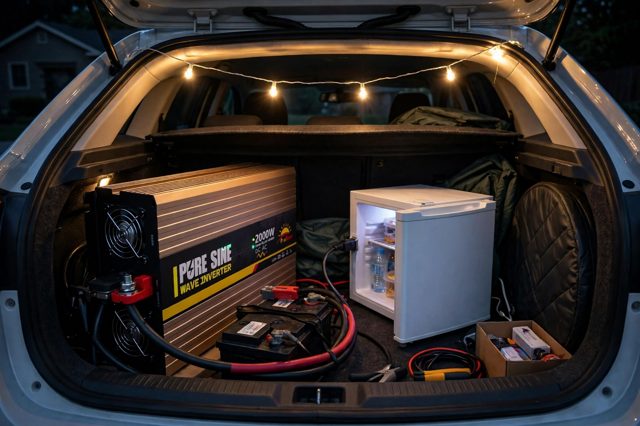
Because home backup from a car is locked twice over:
V2H is factory hardware and software. You need this model, built with the feature. A car you already own — petrol, hybrid or an older EV — cannot gain V2H through an update or an accessory.
Feeding a house from a vehicle touches the home wiring, the meter and the local grid code. Each country approves that connection differently, and some have not approved it at all. That is why Audi can open V2H in three neighbouring markets and nowhere else at launch — and why a wider rollout, if it comes, will arrive country by country over years, not months.
In short: the technology works, but access to it is decided by your car and your postcode.
Who still needs a standalone inverter?Almost everyone outside that small overlap of "owns this new Audi" and "lives in Germany, Austria or Switzerland":
A standalone system splits the job into parts you choose yourself. The inverter is sized by load, the battery is sized by the hours you need, and neither depends on a car brand, a model year or a national grid decision. If one part ages or fails years later, you replace that part — not a car.
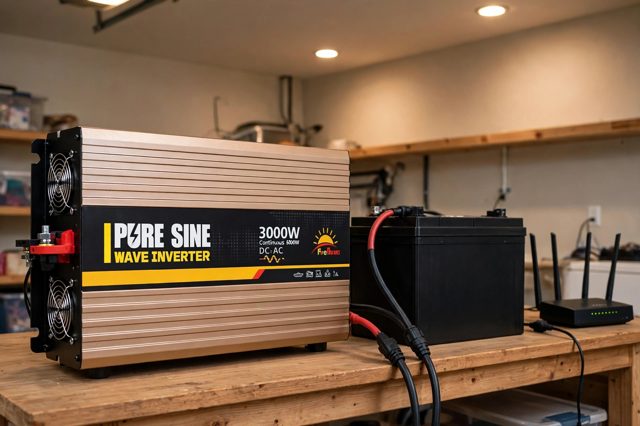
Backup means essentials: LED lights, a Wi-Fi router, phone charging, a refrigerator and a laptop often total well under 1,000W running power. Add larger items — a microwave, a kettle, a small heater — one at a time and note what truly runs together.
Motors and compressors draw extra power at start-up. Choose pure sine wave output, which matches mains power and is safe for fridge compressors, chargers, medical devices and sensitive electronics, and leave headroom above the running total instead of running at the limit.
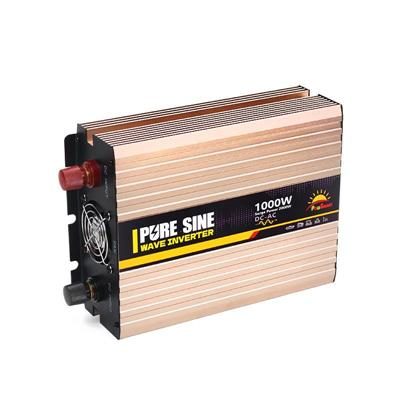
The REP pure sine wave range from Zhejiang Sunrise New Energy Co., Ltd. covers 300W to 6,000W in 12V, 24V and 48V versions, so a lights-and-laptop setup, a fridge-and-cooking setup and a heavier multi-appliance setup each get a correctly sized unit. Size the battery separately for runtime: more hours simply means more battery capacity, with the same inverter.
Use short, correctly rated DC cables, fit the proper fuse close to the battery, secure the terminals and keep the inverter ventilated. High-power inverters draw high DC current, so cable and fuse sizing are safety requirements, not accessories.
Only in Germany, Austria and Switzerland at launch. The car is sold more widely in Europe, but the vehicle-to-home function is enabled in those three markets only.
Audi has not published a V2L output figure for this car. Treat any specific watt number you see elsewhere with caution until Audi releases an official rated specification.
European deliveries are reported to begin in December, with a German starting price of 38,200 euros. Prices and timing in other markets have their own schedules.
Not through V2H unless it was built with that feature and your country supports it. But your current car — or a separate leisure or home storage battery — can power essentials today through a correctly sized standalone pure sine wave inverter.
Add up everything that runs at the same time, add surge headroom for motors, and choose the next pure sine wave size up. Essential lights, communications and a fridge usually fit in the 1,000W–2,000W range; adding cooking or heating appliances pushes the requirement towards 3,000W–6,000W.
Not sure which size fits your home and your loads? Send Zhejiang Sunrise New Energy Co., Ltd. your appliance list through cninverter.com, and we will recommend the right pure sine wave inverter for your setup — for any car, any country, available today.

We use cookies to enhance your browsing experience, serve personalized ads or content, and analyze our traffic. By clicking "Accept All", you consent to our use of cookies.