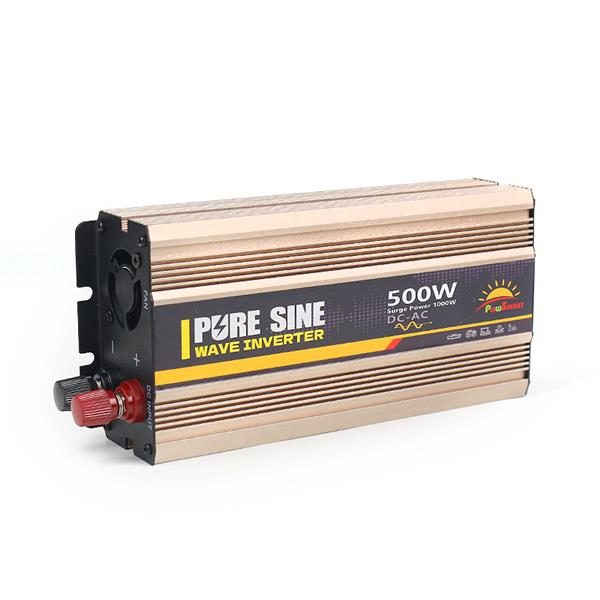
A typical 12V 60Ah car battery can run a 100W inverter load for roughly 3 hours, a 300W load for about 1 hour, and a 500W load for only about 35 minutes — if you protect the battery by using only about half of its stored energy. Run it flat and you will get more time once, but you will likely be unable to start the car afterwards. This guide from Zhejiang Sunrise New Energy Co., Ltd. shows the simple calculation behind those numbers and how to use an inverter without stranding yourself.
How Do You Calculate Inverter Run Time From a Car Battery?Run time depends on three numbers: the battery's usable energy, the inverter's efficiency, and the size of your load. The formula is:
Usable energy (Wh) = battery capacity (Ah) × battery voltage (V) × usable share
Run time (hours) = usable energy × inverter efficiency ÷ load (W)
A 12V 60Ah battery stores 60 × 12 = 720Wh in total. A car starting battery is designed for short, powerful bursts to crank the engine, not for deep discharge, so only about 50% of that energy — roughly 360Wh — should be treated as usable if you still need to start the car. Inverters are not perfectly efficient either; a realistic working figure is around 85%. That leaves about 306Wh of practical AC energy from that battery.
The pattern is simple: double the load and you roughly halve the run time, and heavy loads drain a starting battery far faster than most drivers expect.
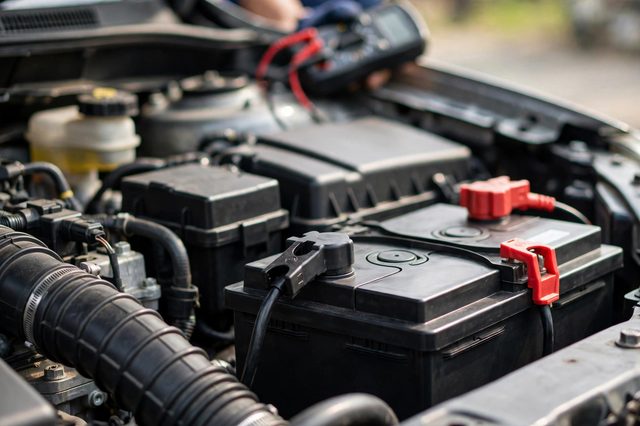
A starting battery that is deeply discharged is damaged by the experience, and a flat battery cannot start the engine. Lead-acid starting batteries lose capacity quickly when they are repeatedly taken to a low state of charge. Even one deep discharge can shorten the battery's life noticeably.
There is also a practical safety point. If the battery is too low to crank the engine, your power source and your transport fail at the same moment. That is why experienced users treat 50% discharge as the stopping point for a starting battery, and why many inverters include a low-voltage alarm and automatic shutdown — those features exist to protect the battery, not just the inverter. When the alarm sounds, stop the load; do not treat the remaining minutes as free energy.
Does Running the Engine Extend the Run Time?Yes. With the engine running, the alternator recharges the battery while the inverter draws from it, so run time is no longer limited by the battery alone. This is the normal way to run medium loads in a parked car, a work vehicle or at a campsite for short periods.
Two cautions apply. First, never run an engine in an enclosed space such as a closed garage, because exhaust gases are dangerous. Park outdoors or in a well-ventilated place. Second, idling is not free power: it burns fuel and adds engine wear, so it suits short or occasional use. For long, heavy or overnight loads, an auxiliary battery is the better answer.
When Do You Need an Auxiliary or Leisure Battery?If you regularly run loads for more than an hour or two, or you run them with the engine off, you need a second battery dedicated to the inverter. An auxiliary or leisure battery is built for deeper, repeated discharge, and it is wired so that the starting battery stays full and the car always starts.
This is the standard arrangement in RVs, camper vans, service trucks and work vehicles: the vehicle charges both batteries while driving, and the inverter draws only from the auxiliary battery when parked. Sizing follows the same formula above — total the watt-hours you need between charges, then choose a battery whose usable energy covers them with margin. A 24V system in a truck works the same way: a 24V 100Ah battery stores 2,400Wh in total, and the usable share depends on the battery type and how deeply it is designed to discharge.
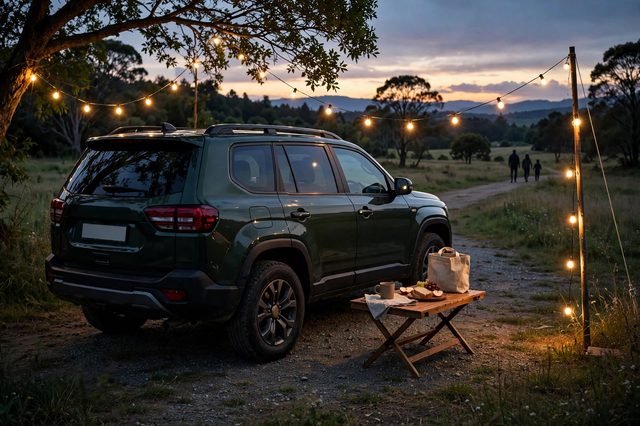
The most effective step is to reduce the load, because run time rises just as fast as watts fall. Practical measures include:
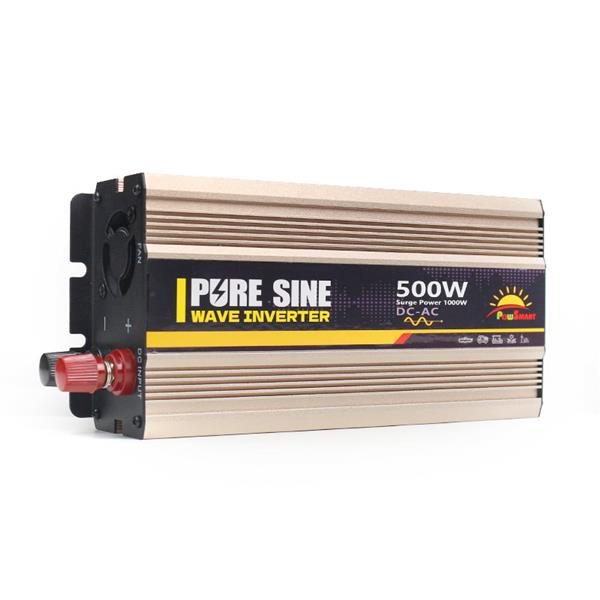
Can a car battery run a 1000W inverter?
Briefly, on paper — but a starting battery alone is a poor match for a 1000W continuous load, which would use its safe usable energy in well under half an hour and draw very high current at 12V. Large inverters belong on a properly sized battery bank, heavy cables and direct battery connections, with the engine running or an auxiliary battery in place.
Will an inverter damage my car battery?
The inverter itself does not damage a healthy battery; deep discharge does. Stay within the roughly 50% usable limit for a starting battery, respect the low-voltage alarm and shutdown, and recharge the battery promptly afterwards.
How long can I run an inverter with the engine off while camping?
With a typical starting battery, plan on light loads only — lights, phones and a laptop for a few hours at most. Anything longer, heavier or overnight should come from an auxiliary battery so the car still starts in the morning.
The honest answer to "how long" is always: it depends on your load and on how much of the battery you are willing to spend. Work the formula backwards — list your appliances, estimate the hours, and the battery size you need becomes clear.
Zhejiang Sunrise New Energy Co., Ltd. supplies pure sine wave inverters and vehicle power systems for cars, trucks and RVs. Tell us your vehicle, your battery voltage and capacity, and the appliances you want to run, and we will recommend the right inverter and battery pairing. Visit cninverter.com or contact us: WhatsApp 86 17706649699, email Long@cninverter.com.

We use cookies to enhance your browsing experience, serve personalized ads or content, and analyze our traffic. By clicking "Accept All", you consent to our use of cookies.