 Yes — 6.6kW vehicle-to-load (V2L) output is genuinely impressive, and the Kaiyi X7 Hybrid shown in October 2026 can run an induction cooker, a projector, lights and audio gear at once. The catch: you can only use that 6.6kW if you own that one hybrid. If your car has no V2L, a standalone pure sine wave inverter gives you outdoor AC power today, without changing vehicles. This guide from Zhejiang Sunrise New Energy Co., Ltd. does the maths honestly.
Kaiyi presented the X7 Hybrid at the 2026 World Power Battery Conference in Yibin as a mobile power station. According to its release, reported by GlobeNewswire on 15 October 2026:
No price was given in the release. On output alone, 6.6kW V2L is first-tier power for camping, filming, events and outdoor work.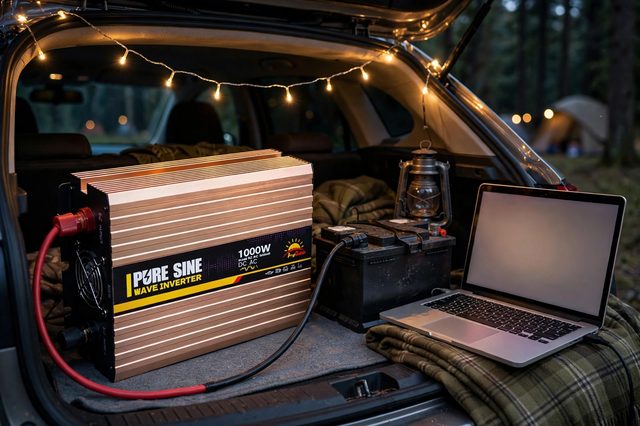
Power and energy are different numbers, and the second one decides your evening. 6.6kW is the rate; 18.67kWh is the tank.
Do the simple division:
A big V2L number tells you what you can switch on, not how long you can keep it on — that is physics for any V2L vehicle.
What Is the Real Limit of Built-In V2L?The limit is not the wattage — it is the lock-in. V2L is factory hardware: a car sold without it cannot gain it later through a software update or simple retrofit. So:
Buying a whole vehicle to obtain one power feature is the most expensive inverter you will ever purchase.
Who Still Needs a Standalone Inverter?A standalone inverter separates the power system from the vehicle, and that separation is exactly what most drivers need:
With a standalone setup, battery and inverter are sized separately, and the car stays just the car — the kit moves with you when you change vehicles.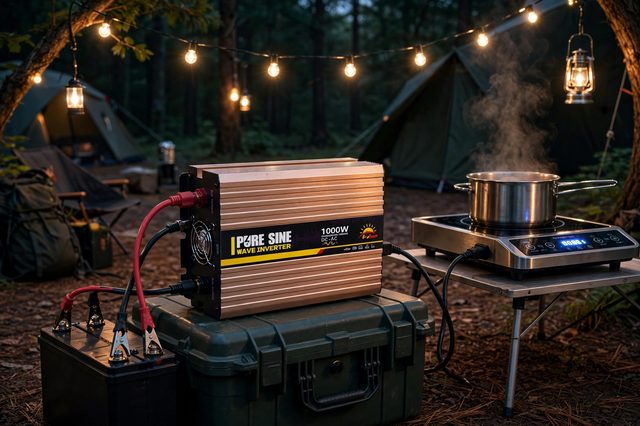
List the loads first, then choose the inverter — never the other way round.
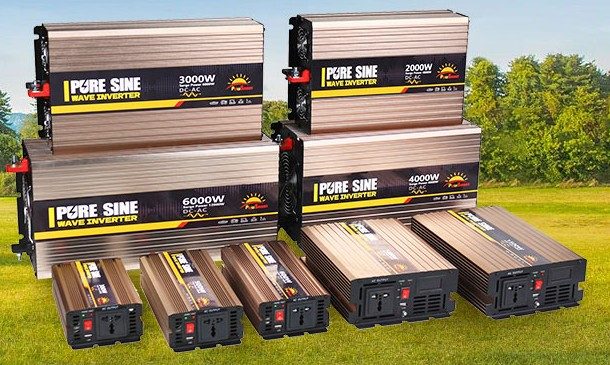
For most car camping and outdoor use, a 1000W to 3000W pure sine wave inverter covers the realistic load list; heavier cooking or tool use points to 4000W–6000W with a 24V or 48V battery system.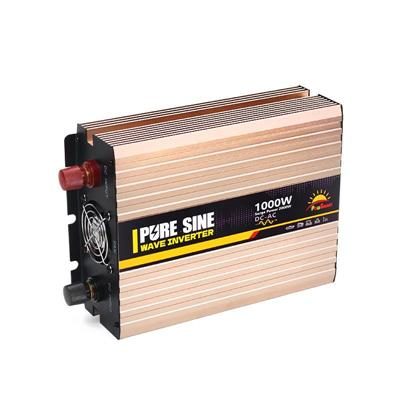
Is 6.6kW V2L better than a standalone inverter?
For that vehicle's owner, V2L is more convenient — no extra box or wiring. For everyone else it is unavailable. A standalone inverter works with almost any car, any separate battery, and any vehicle you buy next.
Can I add V2L to my existing car with an adapter?
No. Adapters sold for specific V2L-equipped models only unlock a feature the car already has. A car without factory V2L hardware cannot discharge its traction battery through an adapter — that is precisely the gap a standalone inverter fills, using the 12V system or an auxiliary battery instead.
How big a battery do I need to match an 18.67kWh hybrid?
You rarely need to. Most camping and event loads use 1–3kWh in an evening. A right-sized auxiliary lithium battery plus a pure sine wave inverter covers that at a fraction of the cost of changing cars.
Will a standalone inverter drain my starter battery?
Yes, if you run large loads with the engine off for hours. Use an auxiliary battery for heavy use, heed the low-voltage alarm, and run the engine periodically.
Get the Power Without Changing the Car6.6kW V2L is great — if you own that one hybrid. For the cars already in driveways today, a standalone pure sine wave inverter in the 300W to 6000W range, matched to a properly sized battery, delivers the same outdoor AC power without a new vehicle.
Zhejiang Sunrise New Energy Co., Ltd. supplies pure sine wave inverters from 300W to 6000W for cars, RVs, trucks, home backup and off-grid solar. Tell us what you want to run, for how long, and in which vehicle, and we will recommend a matched inverter and battery setup. Visit cninverter.com or contact us: WhatsApp 86 17706649699, email Long@cninverter.com.

We use cookies to enhance your browsing experience, serve personalized ads or content, and analyze our traffic. By clicking "Accept All", you consent to our use of cookies.