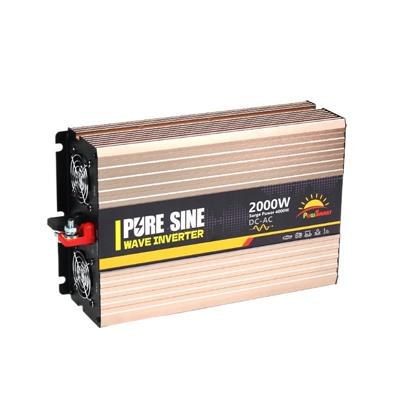
Winter power problems usually start with the battery, not the inverter. When temperatures fall, a battery delivers less usable energy and struggles more with large currents. The winter rule is simple: size the battery for the runtime you need first, then choose a pure sine wave inverter that covers both your continuous load and your highest startup peak. Sunrise New Energy (Powsmart) REP pure sine wave inverters span 300W to 5000W.
Cold affects the battery side of the system far more than the inverter itself. As temperature drops, a battery's usable capacity falls, its internal resistance rises, and a heavy draw — a fridge compressor starting, a pump kicking in — becomes harder to sustain. That is why winter failures often look like an inverter fault: the inverter shuts down on low voltage, or the load drops out under a surge, when the real cause is a battery bank that cannot hold its voltage under load in the cold.
Step 1: Write the load list before you pick a sizeDo not start from a wattage you happen to own. Start from what must actually run, and write down two numbers for each item: its continuous watts and, for anything with a motor or compressor, its startup peak. Check the rating plate on each appliance; do not guess from a similar model. A typical winter list — lighting, a router, a fridge, a water pump, phone charging — adds up quickly, and the fridge or pump startup peak is what decides the inverter's surge rating.
Work through an illustration, not a prescription. Suppose your essentials total 800W continuous and the largest startup peak is 1600W. You then need an inverter rated at or above 800W continuous with a peak rating at or above 1600W, and a battery bank that can deliver the energy: 800W for four hours is 3200 watt-hours before inverter losses, so the bank must hold comfortably more than that in cold conditions. A 2000W pure sine wave inverter, rated 2000W continuous with 4000W peak, covers that example with headroom for an extra load — but the headroom is useless if the battery behind it is sized only for summer.
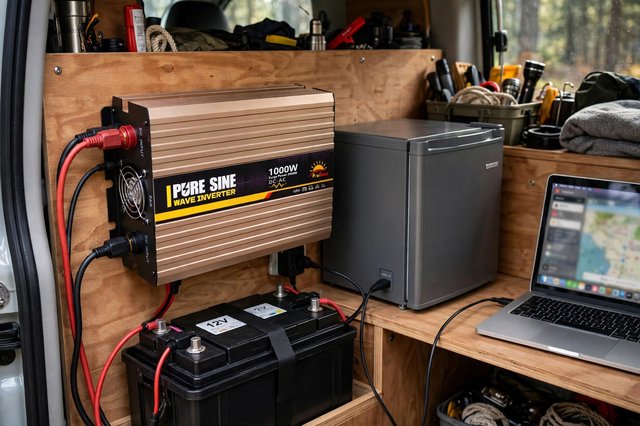
REP inverters come in 12V, 24V, and 48V versions; first match the battery system you already own. For a new or larger system, higher voltage suits bigger, longer-running loads, because the same watts draw far less current. At 2000W, a 12V system draws over 180A, while a 48V system draws about a quarter of that, with higher efficiency and cooler cables.
That current difference is exactly what winter punishes: high current through a cold, high-resistance battery drags voltage down faster and trips low-voltage protection sooner. A larger winter load belongs on 24V or 48V where the installation allows it; a small 12V setup stays sensible for light, short-duration car use. Do not mix platforms, and plan around the 48V low-voltage protection of 40±0.5V, not a nominal label.
Step 3: Wiring and cooling, the winter versionWinter does not relax the wiring rules; it makes them matter more. Size cables for the actual current and length, fit the fuse on the battery positive terminal close to the battery, and keep every connection tight and clean — loose terminals become a voltage-drop problem under a cold-weather surge. This guide gives no wire-size or fuse-rating table on purpose: cable size and fuse rating must follow the manual for the exact inverter model you buy.
Cooling still needs air in winter. Do not box an inverter in tightly to keep it warm, and do not block its fan outlet or heatsink with blankets, boxes, or snow. The REP2000 page lists a working temperature range of -10 to 50 degrees Celsius, but that rating does not warm the battery — keep the inverter ventilated and the battery sheltered.
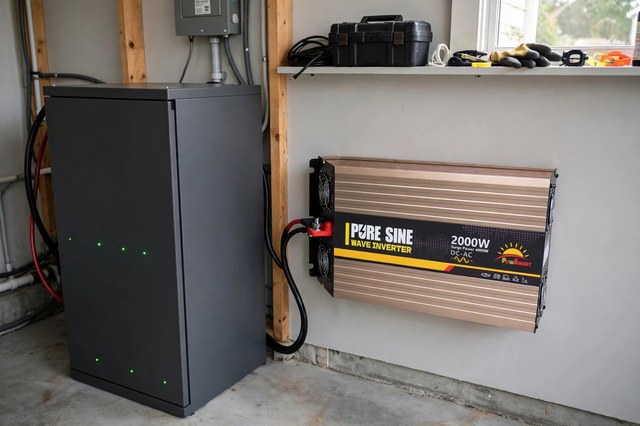
First, keep the battery as warm as practical, out of wind and off a frozen floor. Second, keep it fully charged before a cold spell. Third, check terminals for looseness and corrosion before winter. Fourth, disconnect loads when the system sits unused, so standby draw does not drain the bank. Fifth, test the full load list on a cold evening before you depend on it.
Why a standalone inverter still makes sense in winterVehicle-based power — V2L and V2H — is improving, but it remains tied to a specific new car, adapter or home installation, and region: Tesla's home backup in the United States, for example, still requires a Powerwall first (see our Tesla V2H article). A standalone pure sine wave inverter has no such lock-in. It works with the car, RV, or home battery you already have, it can be moved between sites, and if one part fails, you replace that part — not the whole vehicle system. For winter preparedness, that independence matters: the backup you need in a storm is the one already installed and tested, not waiting on a new car delivery.
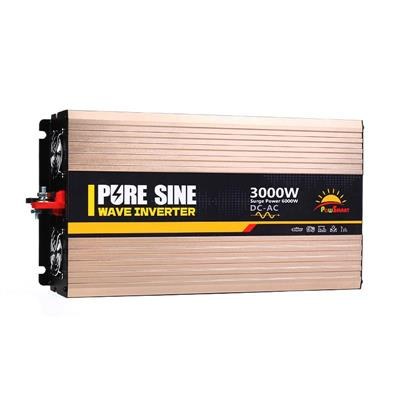
The full REP range, from 300W to 5000W, is listed on the REP pure sine wave inverter series page, and a 3000W model is a common middle step. Choose by the load list and the battery behind it, not by the biggest number on the page.
Frequently asked questionsUsually not. Winter shortfalls are most often a battery-runtime problem. Check the battery first; only size up if the load or startup peak genuinely exceeds the current unit's ratings.
Check the manual for your exact model — the REP2000 is rated down to -10 degrees Celsius — but shelter the battery from wind and frost, keep vents clear, and never rely on the inverter to warm the battery.
Match the battery you have. For new, larger, or longer-running systems, 24V or 48V draws far less current for the same watts, which helps a cold battery hold its voltage under load.
Follow the manual for your exact inverter model. Cable size depends on current and length, and the fuse belongs on the battery positive terminal close to the battery; this guide intentionally does not publish a generic table.
Add up continuous watts, multiply by the hours you need, compare that energy with what the bank can deliver in the cold, and test the real load list on a cold evening. If the test falls short, add battery capacity first.
Bottom line: size the battery for winter runtime, match the inverter to the load list and startup peak, wire it to the manual, and test it before you need it. Send us your load list — continuous watts, startup peaks, battery voltage, and hours needed — and we can help you pick the right REP size. Contact Sunrise New Energy through cninverter.com for sizing advice.

We use cookies to enhance your browsing experience, serve personalized ads or content, and analyze our traffic. By clicking "Accept All", you consent to our use of cookies.