BAIC Foton introduced the Tunland V PHEV plug-in hybrid ute with 220V/6kW vehicle-to-load (V2L) at its African partner conference on October 29, 2026. That 6kW figure is useful for worksite and outdoor power — but the ute is not on sale yet, no price or launch date was published, and the press release gives no battery capacity, so no one can yet say how long 6kW will run. If you need known power today, a standalone inverter sized by your load list needs no launch date.
What Foton Introduced in AfricaAccording to a BAIC Foton press release distributed through GlobeNewswire on November 2, 2026, the Tunland V PHEV was introduced at the company's African partner conference in Gqeberha, South Africa, on October 29, 2026. It is a plug-in hybrid pickup: a 2.0-litre turbo hybrid engine, four-speed DHT gearbox and P1 P2 MLOCK Hyper four-wheel drive, with a combined 350kW and 800N·m. The release states up to 87km of pure electric range and up to 1,000km of combined WLTP range, with 32kW DC fast charging (30%–80% in about 30 minutes). It also lists 250mm of ground clearance, 3.5 tonnes of towing and IP68 battery protection.
The V2L figure sits in that same release: a 220V/6kW vehicle-to-load output, described as supporting demanding terrain and outdoor use. One wording point matters throughout: the release says the ute was introduced at the conference. It gives no price, no launch date and no battery capacity, so this article treats it as a reveal, not a vehicle you can buy.
Why 6kW Is a Serious NumberMost V2L announced this year sits well below 6kW: Tesla's Australian V2L (covered here November 2) is 3.45kW on a 15A outlet, and the BYD Sealion 5 (covered here October 30) offers 3.3kW. The Tunland's 6kW is roughly double either — close to the Kaiyi X7 Hybrid's 6.6kW, covered here October 18 — and that puts it in a different class: worksite and serious campsite power, not just phone chargers and lights.
But a kilowatt rating is only half the question; the other half — how long the power lasts — is missing. A 6kW outlet fed by a small battery is a short burst; fed by a large one, a working day. Foton's release gives the output, not the capacity, so the runtime question has no answer yet.
First, it is not on sale. The October 29 event was an introduction at a partner conference, and the press release carries no price and no launch date — so anyone planning a purchase around this V2L system is planning around a date that has not been announced.
Second, PHEV maths are not EV maths. The Tunland V PHEV's pure electric range is 87km — a modest figure for a ute that must also drive. Without a published battery capacity, you cannot calculate how many hours 6kW will run, and you cannot assume the engine will keep topping the battery up while V2L is running: the release does not describe any engine-supported discharge mode. The honest reading is that 6kW is the headline output, and the runtime, the rated-versus-peak split and the discharge cutoff are all still unpublished.
One more distinction: V2L powers individual devices — not a house (V2H) and not the grid (V2G). The Tunland V PHEV announcement covers V2L only.
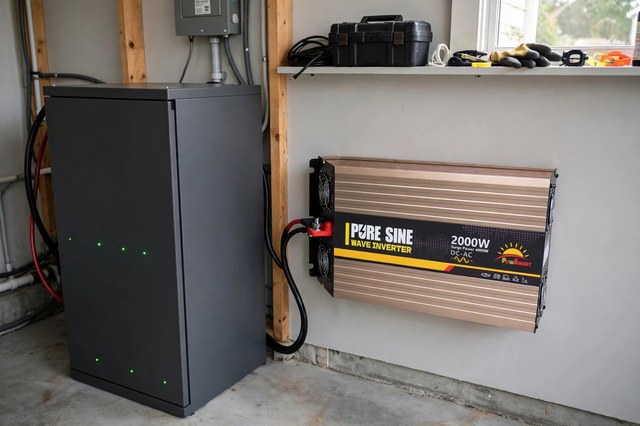
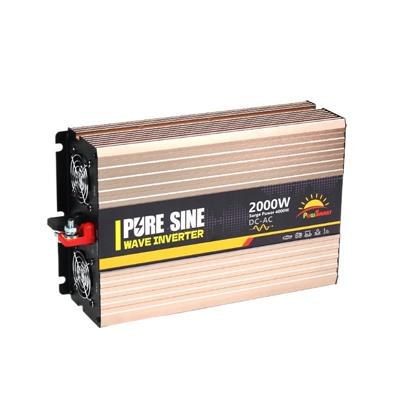
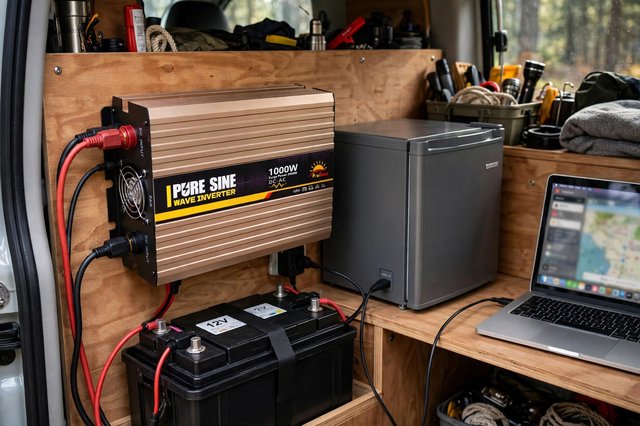
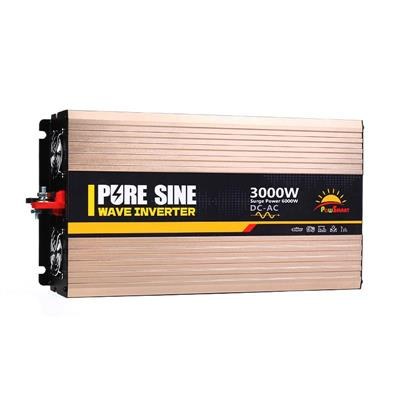
For anyone who needs a known 6kW-class answer now — a tradesperson whose ute has no V2L, or a camper who wants power independent of any one vehicle — a standalone pure sine wave inverter answers with published numbers. The REP pure sine wave inverter series from Sunrise New Energy (Powsmart) runs from 300W to 5000W in 12V, 24V and 48V versions. The 3000W model is rated 3000W continuous with 6000W peak, so it matches the Tunland's 6kW figure on peak power — the number that matters when a motor starts. But a sustained 6kW continuous load is above the 5000W top model's rated output, so size by continuous watts, not by the headline, and check the manual.
Size it the way the Tunland's missing numbers block: add up the running watts of your loads, allow two to three times for the startup surge of every motor-driven device, and pick an inverter rated above the highest surge. Then size the battery separately for the hours you need — the battery, not the inverter, decides runtime. Wiring and fuse sizes follow the product manual. That package works on any vehicle, worksite or campsite today, with no launch date, adapter or brand ecosystem in the way.
See the 3000W pure sine wave inverter (3000W rated, 6000W peak) and the 5000W pure sine wave inverter, or browse the full REP pure sine wave inverter series. For contrast: MG MGU9 Ute V2L: Check Work Power Before You Rely On It — on sale in Australia, but with no V2L power rating published — and Kia's 9.2kW Work Van Arrives in 2027.
Not on the evidence published so far. It was introduced at BAIC Foton's African partner conference on October 29, 2026, with no price or launch date in the press release. Treat it as a reveal until Foton announces sales details.
It cannot be calculated from the published information: the release gives the 220V/6kW output but no battery capacity or discharge cutoff, and it does not describe the engine supporting V2L output. Do not trust any runtime figure that cites no source.
6kW is serious — roughly double the 3.3kW–3.45kW of the BYD Sealion 5 and Tesla's Australian V2L — but tools are sized by running watts plus startup surge, which can run two to three times higher. Confirm the rated-versus-peak split and the cutoff before planning a job around it.
No. V2L powers individual devices. Powering a house is V2H, which needs home hardware and installation, and exporting to the grid is V2G, which needs a utility program. The Tunland V PHEV announcement covers V2L only.
Add up the running watts of your loads, allow two to three times for motor startup surge, and pick an inverter rated above the highest surge. A 3000W model with 6000W peak matches a 6kW headline on peak power; for a sustained 6kW continuous load, size by continuous watts and check the manual.
Bottom line: The Tunland V PHEV's 220V/6kW V2L is a strong headline — roughly double the V2L of the cars covered here recently — but it was introduced at a partner conference, not launched, and the numbers that decide real use (battery capacity, runtime, rated-versus-peak split, cutoff) are still unpublished. If you need known watts today, a standalone pure sine wave inverter sized by your load list does the job on any vehicle, without waiting for a launch date. Contact Sunrise New Energy with your load list and battery voltage for help sizing the right REP model.

We use cookies to enhance your browsing experience, serve personalized ads or content, and analyze our traffic. By clicking "Accept All", you consent to our use of cookies.