On October 27, Tesla said every new Tesla in the United States and Mexico can now power tools and appliances through Powershare. That is real progress — and it is narrower than the headline sounds. What became standard is vehicle-to-load (V2L): power for individual devices. It is not vehicle-to-home (V2H), which backs up a whole house, and it is certainly not vehicle-to-grid (V2G), which sells power back to the grid.
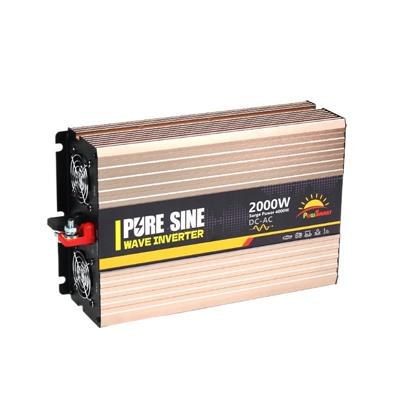
Sunrise New Energy (Powsmart) builds standalone pure sine wave inverters for the gap this announcement leaves: drivers whose cars are not covered, or who need backup power today.
What Tesla Announced on October 27According to industry reporting on Tesla's North America announcement of October 27, 2026, V2L through Powershare is now standard equipment on new Teslas sold in the United States and Mexico. V2L used to be limited to the Cybertruck and higher trims. Now, for a new car in those two markets, powering a tool, a light, or a small appliance from the car is a default capability rather than an option-box decision.
The scope is narrow: new cars in the United States and Mexico only — not a worldwide rollout, with no Canadian timetable announced. It covers V2L only; whole-home backup needs separate hardware, and grid export is not part of this announcement.
The three letters describe three different jobs. V2L powers one device or a few devices through an outlet: a drill, a coffee maker, a lamp. V2H powers a home through a transfer system during an outage, which needs home hardware and installation. V2G exports power to the grid, which needs utility approval and a program to buy it. Tesla's October 27 announcement standardizes the first job only. If your goal is to keep a fridge, lights, internet, and a pump running through a blackout, a standard V2L outlet does not deliver that on its own — that is the job of the separate US home-backup system, which requires a Powerwall 3 and a Wall Connector.
The US version of this V2L setup does not come straight out of the charge port as a household socket. Industry reporting on the announcement describes a two-piece route: a Mobile Connector plugged into the charge port, plus an Outlet Adapter that turns that connection into standard AC outlets. That differs from the Australian version, where an adapter plugs directly into the charge port. If you budget for the car and forget the kit, you cannot use the feature on day one.
A car without Powershare hardware cannot gain it through a software update, so owners of older Teslas are not covered by this standardization. Buyers outside the United States and Mexico are not covered either. And drivers who went the third-party route have a fresh caution to weigh: since late October 2026, owner reports on the Tesla Motors Club forum, relayed by industry sites on October 29, 2026, describe third-party V2L adapters disconnecting minutes after starting on software version 2026.38.5.1, in one reported case at around 3 kW after about three minutes. Tesla has not commented on these reports, and whether the behavior is deliberate blocking has not been confirmed. Treat it as an unverified owner report, not as official policy.
Run this short checklist first:
Confirm the hardware in the car. Go to Software, then Additional Vehicle Information, and look for the Powershare Support entry. If it does not say the car is supported, no adapter or update will add V2L.
Confirm the kit is complete. For the US setup, that means both the Mobile Connector and the Outlet Adapter — not one or the other.
Write down two numbers for every load. Every device has a running wattage and a startup surge, and motors such as fridge compressors and power tools surge well above their running draw. Size for the surge, not just the label. The October 27 announcement gave no new US power figure for this standard V2L setup, so do not assume a number from another market — the earlier US background figure of 2.4 kW at 120 V described the previous adapter setup, not a newly announced rating.
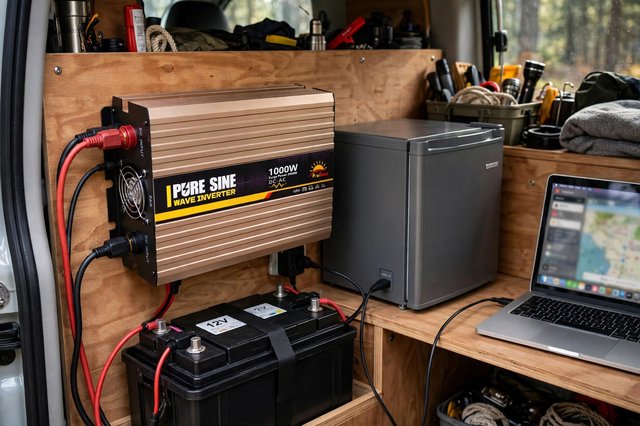
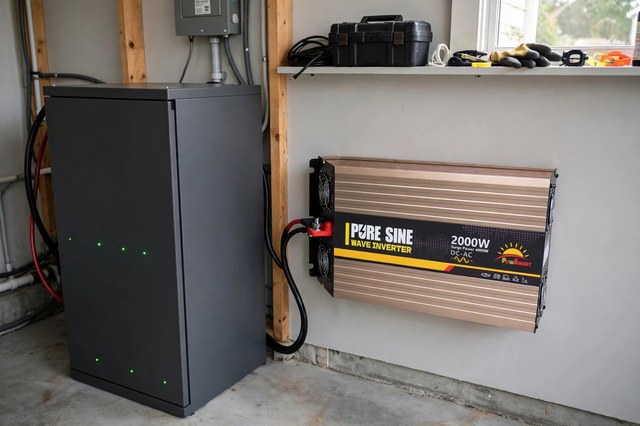
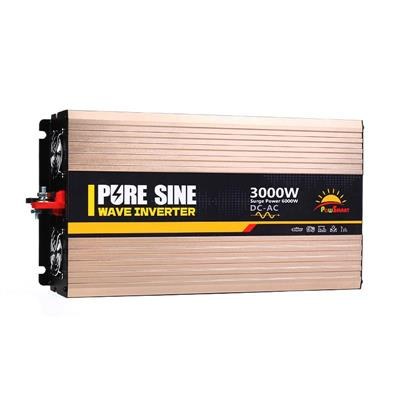
The Standalone Alternative: Choose by Load, Not by CarFor everyone outside this announcement — owners of older cars, drivers of other brands, fuel-car owners, and anyone who needs outage power now rather than at the next car purchase — a standalone pure sine wave inverter covers the same single-device and essential-load jobs without any car-brand lock-in. Sunrise New Energy's REP pure sine wave inverter series covers 300W to 5000W, so you pick by your load list: a 300W unit for laptops and lights, a 1000W unit for a coffee maker or a mini fridge, a 3000W unit for heavier workshop or backup loads.
Browse the full range on the REP pure sine wave inverter series page, including the 3000W pure sine wave inverter and the 5000W pure sine wave inverter, and compare with our earlier Tesla coverage: Tesla V2L Reaches Australia: 3.45kW, Adapter Extra and Tesla V2H Needs a Powerwall First.
No. The October 27 announcement covers new cars in the United States and Mexico. Other markets follow their own schedules, and no Canadian timetable has been announced for this expansion.
No. V2L needs Powershare hardware. Check the Powershare Support entry under Software, then Additional Vehicle Information, before buying any adapter.
No. V2L powers individual tools and appliances. Whole-home backup is a separate V2H system needing home hardware such as a Powerwall and a Wall Connector.
Be cautious. Forum owner reports since late October 2026 describe third-party adapters disconnecting on recent software, but Tesla has not commented and the cause is unconfirmed. Buy from a seller with a clear return policy and test it early.
Add up the running watts of your essential loads, check the startup surge of any motor-driven device, and pick a pure sine wave inverter rated above the highest surge. The REP series runs from 300W to 5000W — send us your load list and we will help you match a model.
Bottom line: Tesla making V2L standard in the US and Mexico is a genuine step — car power stops being a trim-level gamble. But standard still means V2L, not home backup, and it still means the right car, the right kit, and a load list that fits. If any of those three is missing, a standalone inverter chosen by load is the simpler answer. Contact Sunrise New Energy with your load list and battery voltage, and we will help you size the right REP model.

We use cookies to enhance your browsing experience, serve personalized ads or content, and analyze our traffic. By clicking "Accept All", you consent to our use of cookies.