Kia's PV7 electric work van is reported to offer up to 9.2kW of vehicle-to-load (V2L) power — enough to run serious tools from the van itself. But you cannot buy one yet. European order books do not open until April 2027, first deliveries are due in summer 2027, and no price has been announced. If your crew needs power on site today, waiting more than half a year for a van is not a plan — a standalone pure sine wave inverter fitted to the van you already own works now.
What Kia's PV7 Actually OffersThe PV7 is the second model on Kia's dedicated PBV electric van platform, after the smaller PV5, and it is aimed squarely at fleets, logistics operators, shuttle businesses and small firms — not at family buyers. The range will eventually cover 23 versions, including Cargo, Passenger, Chassis Cab and converted variants.
For on-site work, the headline is V2L: power taken from the traction battery to run equipment outside the van. According to Professional Van's report of 19 October 2026, the PV7 offers up to 9.2kW of V2L through one exterior socket and two interior sockets. Other coverage confirms V2L for tools without giving that figure, so treat 9.2kW as a reported figure, not a tested one. The van itself is substantial: two NMC battery options, 71.5kWh and 96.2kWh, 800V architecture with 350kW fast charging taking 10–80% in about 25 minutes, long-range Cargo WLTP range above 460km, and maximum payload about 1,165–1,200kg.
Why 9.2kW Is a Serious NumberCredit where it is due: 9.2kW is at the top end of what V2L currently offers. It is higher than the 6.6kW V2L figure reported for the Kaiyi X7 Hybrid, and it moves V2L from "charge a laptop and run a light" territory into genuine worksite territory, where several tools, chargers and lights may run at once.
The PV7 itself was shown at the IAA in September 2026, but the news in October 2026 is the timetable, not a launch. European order books open in April 2027, the van goes on sale in Europe in the second half of 2027, and first deliveries are expected in summer 2027. Price and final specifications have not been announced.
That timetable is the whole story for a working fleet. A crew that needs to run tools from a van this winter cannot book a PV7, cannot price a PV7, and cannot plan a job around a PV7. A future van, however good, does not power today's job.
One Battery, Two JobsThere is a second trade-off that built-in V2L cannot avoid: the power for your tools and the range for your route come from the same battery. Every kilowatt-hour spent on tools is a kilowatt-hour no longer available for driving, so a crew must manage that balance all day.
A standalone inverter breaks that link. The inverter draws from a separate auxiliary battery, so the van's driving range is untouched by the tools, and the work battery can be sized for the job and replaced without touching the vehicle.
Who Still Needs a Standalone Inverter TodayAlmost every working van on the road today falls into this group: existing diesel and petrol vans, older electric vans, pickups and site trucks, and any fleet that will not be replacing its vehicles in 2027. None of these will gain V2L by waiting, because V2L is a property of the new van, not an upgrade to the old one.
The same applies to fleets that mix vehicle types. A single inverter specification that fits any van in the fleet is simpler to buy and maintain than a different built-in system per model, and when a van is sold, the inverter moves with the crew to the next vehicle.
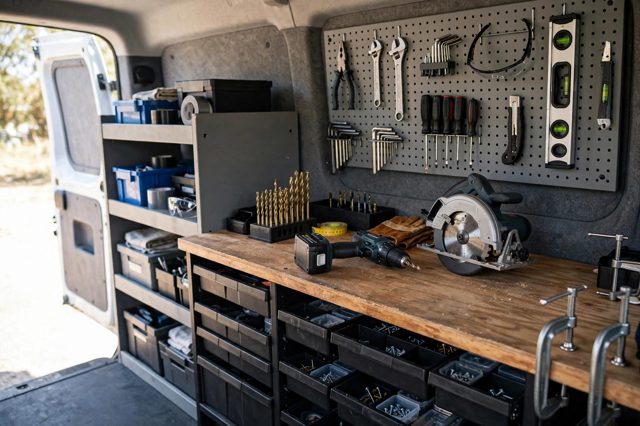
The Standalone Alternative You Can Fit TodayA standalone pure sine wave inverter takes the opposite approach to waiting for a new model: it is chosen by load, not by vehicle. You list the tools you actually run, pick an inverter that covers their combined running watts plus start-up surge, pair it with a battery sized for the runtime you need, and fit it to the van you already drive.
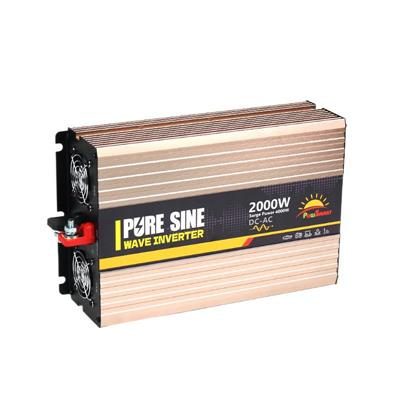
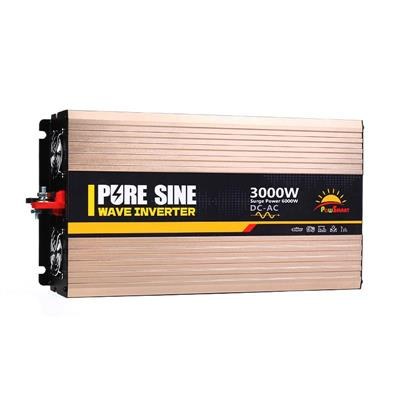
The REP pure sine wave inverter series from Zhejiang Sunrise New Energy Co., Ltd. covers 300W to 6000W, in 12V, 24V and 48V versions, chosen by load. See the 2000W pure sine wave inverter (4000W peak) and the 3000W pure sine wave inverter (6000W peak), or browse the full REP pure sine wave inverter series. Note honestly that 9.2kW is above this range's 6000W ceiling: the standalone route does not out-power the PV7, it gets usable van power months earlier, on any van.
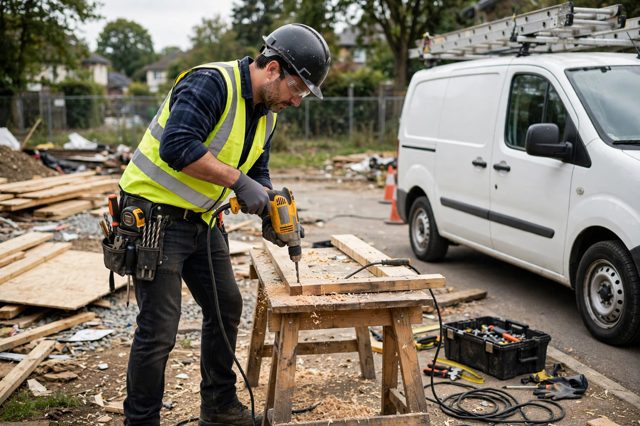
Step 1: List your real loads. Read the watts from each tool's rating plate — do not guess. Step 2: Add running watts, then allow for surge. Motors draw more at start-up, so leave headroom. Step 3: Size the battery for runtime, not just watts. A 1000W load for one hour needs about 1000Wh of usable energy before inverter losses. Step 4: Choose pure sine wave output. It runs modern chargers and sensitive electronics cleanly, where a rough modified sine wave can cause overheating or damage.
Fitment matters as much as sizing: use cables rated for the current, fuse the battery connection, keep the inverter ventilated, and never run it from a starter battery you also need to start the van.
FAQNot yet. European order books open in April 2027, with first deliveries in summer 2027 and sales in the second half of 2027. Price and final specifications have not been announced.
Up to 9.2kW, as reported by Professional Van on 19 October 2026, through one exterior socket and two interior sockets. Other coverage confirms V2L for tools without giving that figure, so it should be read as a reported figure until Kia confirms it in full specifications.
Yes. V2L draws from the same traction battery that drives the van, so energy spent on tools is energy no longer available for range. A standalone inverter on a separate auxiliary battery avoids that trade-off.
It depends on the tools, not the van. Add up the running watts of everything you run at once, allow for motor start-up surge, and choose within the 300W to 6000W REP range accordingly. Check each tool's rating plate before choosing.
The PV7's reported 9.2kW V2L is a genuinely strong number, but a van you cannot order until April 2027, at a price nobody knows, does not power a job this winter. A standalone pure sine wave inverter, sized to your tools and fitted to the van you already own, gives you site power today — and it moves with you when the van changes. Tell us your tool list and working day, and we will help you size the right inverter: contact Zhejiang Sunrise New Energy Co., Ltd. via cninverter.com for selection advice.
For the previous day's story on staged vehicle-energy rollouts, see Hyundai's V2X Brand: V2H Comes Later.

We use cookies to enhance your browsing experience, serve personalized ads or content, and analyze our traffic. By clicking "Accept All", you consent to our use of cookies.