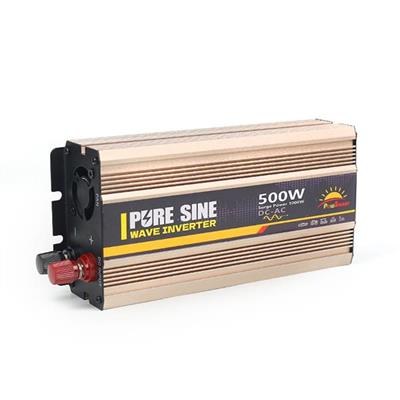
Yes — you can run a mini fridge on a car inverter, and for most fridges a 500W pure sine wave inverter is the comfortable choice. A typical mini fridge draws only about 50–100W while its compressor is running, but it needs a brief burst of several times that power every time the compressor starts, and that start-up surge is what decides the inverter size. This guide from Zhejiang Sunrise New Energy Co., Ltd. works through the numbers.
How Much Power Does a Mini Fridge Actually Use?A mini fridge is a light running load and a heavy starting load at the same time. Check the rating plate inside the door or on the back, and you will usually find figures like these:
The running figure is only half the story. When the compressor motor kicks in, it can draw roughly three to five times its running watts for a fraction of a second. A fridge rated at 80W can therefore ask for 300–400W for a moment at every start. An undersized inverter may trip or fail to start the compressor at all.

Size for the surge, not just for the running watts, then add headroom. As a practical guide:
One size above your calculation is sensible; three sizes above is wasteful, because a bigger inverter draws a little more power just idling, which matters on a small car battery.
Multiply amps by mains voltage to get watts — 0.8A at 120V is about 96W — then allow three to five times that figure for starting.
Why Does Pure Sine Wave Matter for a Fridge?A fridge compressor is a motor, and motors run best on pure sine wave power. On a modified sine wave inverter, compressor motors often buzz, run hotter and work less efficiently, and some newer fridges with electronic controls refuse to start at all. Pure sine wave output matches household mains, so the fridge behaves the same way it does plugged in at home. For any load with a motor or a compressor, pure sine wave is the safe default.
How Long Will Your Car Battery Last?While you are driving, the alternator does the work and runtime is not really an issue. Parked with the engine off, the battery is the limit. A typical 12V 60Ah starter battery holds about 720Wh on paper, but you should plan to use only about half of that — roughly 300–360Wh — if you still want the engine to start afterwards.
A mini fridge cycles on and off, so in mild weather it might average only 25–40W across an hour. Against a 300Wh usable budget, that is roughly 8–12 hours of parked fridge time — enough for an overnight stop, not for a whole weekend. Three habits stretch that budget a long way:
Treat the inverter's low-voltage alarm as a stop signal, not background noise. If you regularly sleep with the fridge running, a separate auxiliary battery is the proper fix, so the starter battery is never touched.
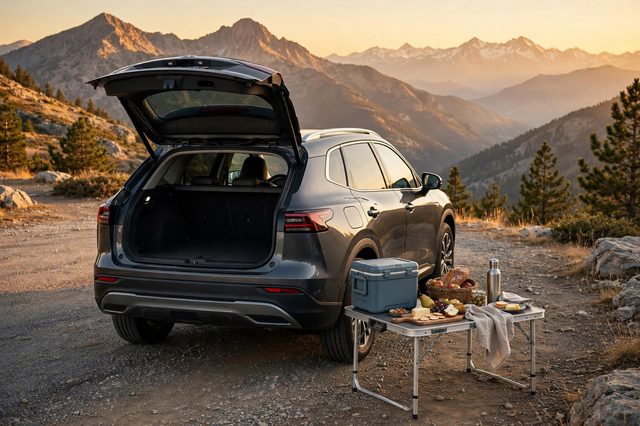
Above about 150W, connect the inverter directly to the battery — and a fridge setup belongs there. Cigarette lighter sockets are normally fused around 10–15A, which suits phones and lights. A 500W inverter at full load draws over 40A from a 12V battery, far beyond what a socket can supply. Use the battery cables supplied, keep them short, and fit a fuse close to the positive terminal.
Five Tips for Running a Fridge Well on the Road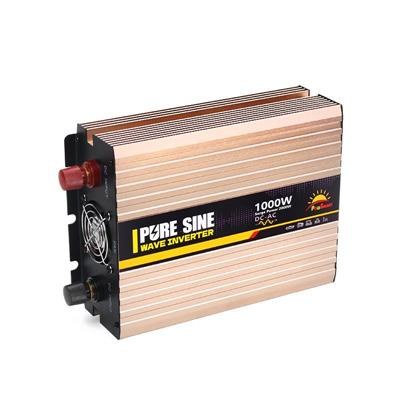
Can a 300W inverter run a mini fridge?
Sometimes. It can start many small fridges rated under about 90W, but the margin is thin. If the compressor surge exceeds the inverter's peak rating it will trip. A 500W pure sine wave model is the more reliable choice.
Will a mini fridge drain my car battery overnight?
It can come close on a small starter battery. Plan on roughly half the battery's capacity as your safe budget, pre-cool the fridge, and heed the low-voltage alarm. For repeated overnight use, fit an auxiliary battery.
Is it better to buy a 12V car fridge instead?
If the fridge only ever lives in the car, a native 12V compressor fridge avoids conversion losses and needs no inverter. An inverter makes sense when you already own a mains mini fridge or want one power source for several appliances.
Cold Drinks, Sensible NumbersRunning a mini fridge from a car is easy once you respect two numbers: the compressor's start-up surge, which sets the inverter size, and your battery's usable energy, which sets how long you can stay parked. A 500W pure sine wave inverter, wired directly to the battery, pre-cooled food and a daily drive will cover most road trips without drama.
Zhejiang Sunrise New Energy Co., Ltd. supplies pure sine wave inverters from 300W to 6000W for cars, RVs, trucks and off-grid use. Tell us your fridge's rated watts and how long you park with the engine off, and we will recommend the right inverter size. Visit cninverter.com or contact us: WhatsApp 86 17706649699, email Long@cninverter.com.

We use cookies to enhance your browsing experience, serve personalized ads or content, and analyze our traffic. By clicking "Accept All", you consent to our use of cookies.